


Valle Maira The Most Unspoiled Valley In Italy
Valle Maira is the most unspoiled valley in Italy”: that’s how CNN defined it in 2019 – and not only them, the press seems unanimous!
From the impressions collected directly on the spot by the editorial staff, we can only confirm the authentic atmosphere, far from the chain tourism of other mountain areas, although beautiful, in our country.
Always a territory respectful of itself and its peculiarities, with a great work of protection by its consortia, it has been able to enhance rather than eradicate the apparent weaknesses that had favored depopulation in the years of economic boom in the post-war period (lack of a large center in favor of a plethora of small Alpine hamlets and modest centers, a narrow and winding access road that makes connections with the valley floor difficult, few flat lands to be devoted to agriculture, etc.).
Today that protection has become an example of green and slow management, which has maintained a hospitality devoid of frills but warm and welcoming with ancient flavors, in short, the ideal place to completely disconnect, immersing oneself in suggestions from another time.
Valle Maira is a mountainous region located in the western part of the Italian Alps: characterized by an unspoiled nature and a strong cultural tradition, the valley offers visitors the opportunity to discover historic villages, scenic trails, and a local cuisine rich in authentic flavors. The road that leads to the valley is narrow and winding as we said, but the landscape that can be admired during the journey is breathtaking and definitely worth the effort. Furthermore, thanks to the Piemonte Voucher formula, it is possible to visit the region at affordable prices and discover its beauties in an economical way.
Valle Maira is near the border with France and presents a strong cultural influence of the neighboring Occitania. The valley offers visitors unspoiled nature, historic villages, and scenic trails. The Locanda il Campo della Quercia is an ideal base for exploring the area, enjoying local cuisine and dedicating oneself to personal regeneration thanks to the brand new wellness area. The environment of the inn is cozy and homely, with options for children on the menu. Dinner was particularly tasty, with typical Piedmontese dishes presented with care. It is worth mentioning the two sets of appetizers (hot and cold) that were particularly interesting.
The following morning was dedicated to discovering the territory, fully embracing the implicit invitation of Valle Maira to slow down its rhythms. This is an area that respects itself and discourages the bite-and-run, where a week’s vacation is the best way to rest and discover the wonders of the place without frenzy.
From the inn, two loop trails depart: one lasts just over an hour, the other about twice as long. The owner is generous with advice and tips: she indicated the first as the best choice in terms of scenic beauty.
Once on the trail that immediately enters the thick of the forest, and after passing some abandoned huts, the walk turned into a real botany lesson. The children had a lot of fun with the different species of plants, such as chestnuts, hazelnuts, and ferns, some of them quite large. The start of the walk is slightly uphill and, after a short while, you arrive in a small clearing with huts and a bench and table to sit on, and, if you arrive at the right time, even to eat with a lovely view. The “botanical” fun continued at this point, after the children discovered a giant mushroom that caused wonder and laughter.
After passing through the clearing, the trail gently descends while admiring the trees that begin to change color in autumn and drop their leaves. One can hear the soft babble of a small waterfall before returning to a dirt road that announces the proximity of the pasture and inn. For lunch, the inn provides simple yet truly tasty sandwiches, and after a brief break, it’s time for a visit to Dronero, known as ‘the gateway to the Maira Valley.’ This medieval center is located at the confluence of the Maira stream with the Rio Roccabruna and was dominated by the Marquises of Saluzzo and later by the Savoys until the unification of Italy. There are still many traces of the past, including the native folk culture and art. Particularly suggestive and not to be missed is the late medieval bridge called the ‘devil’s bridge’ because of its being a real engineering masterpiece of the time that made one suspect… a non-natural origin! Also very charming is the small water mill built by Benedictine monks 600 years ago, still active in the production of biscuits (and visitable on Saturday mornings), the only one so old in the entire valley.
Walking through the historic center, one comes across a structure with a curious appearance that also arouses the interest of children: it is the “covered market” of Dronero or Foro Frumentario, a rare example of an octagonal grain lodge from the mid-fourteenth century, transformed into a votive chapel to St. Sebastian after the plague of 1522.
To fully capture the atmosphere of these places, there is nothing better than taking the time to read and tell the local legends and folklore together, which still seem to hover among the arches and battlements of these works that – whether it was the devil or man…! – have certainly successfully challenged the course of centuries.
Back at the refuge, the day in the Maira Valley ends with a greeting to the friendly family sheepdogs that guard the pasture and a dinner that confirms the excellent impression of the previous meals.
The next day includes a visit to Elva, a village located at 1637 meters above sea level with a particularly panoramic view but difficult to access. It is said that it was built by four bandits on the run in search of a secluded and difficult-to-reach place. In Elva, there is one of the most bizarre museums you will ever hear of: the ancient craft of hair collectors who served to make wigs, also sold in neighboring France.
The territory of Macra also offers beautiful chapels and abbeys such as San Salvatore and San Sebastiano, both a few kilometers apart.
There is also a ‘itinerant painters’ trail that crosses the area, and in Elva, there is the splendid S. Maria Assunta, while San Peyre in Stroppo is an unmissable place where, bearing witness to the strong imprint of popular culture, a shepherd is depicted on the frescoed walls with the typical bagpipes of the Cuneo valleys, together with a biblical scene.
Whether you are a lover of unspoiled and less-traveled nature (an example is the famous Stroppia waterfalls, the highest in Italy, located right in the Maira Valley) or a connoisseur of popular traditions, this territory offers an extraordinary synthesis and rugged beauty that steals the heart and makes you want to come back to admire every small detail that it has managed to preserve to this day with love and tenacity.”
You may also like

Luxury Tree House (and Much More!) In Casentino’s Forest
Arriving at Fattorie di Celli, one immediately realizes that they are about to experience a unique a
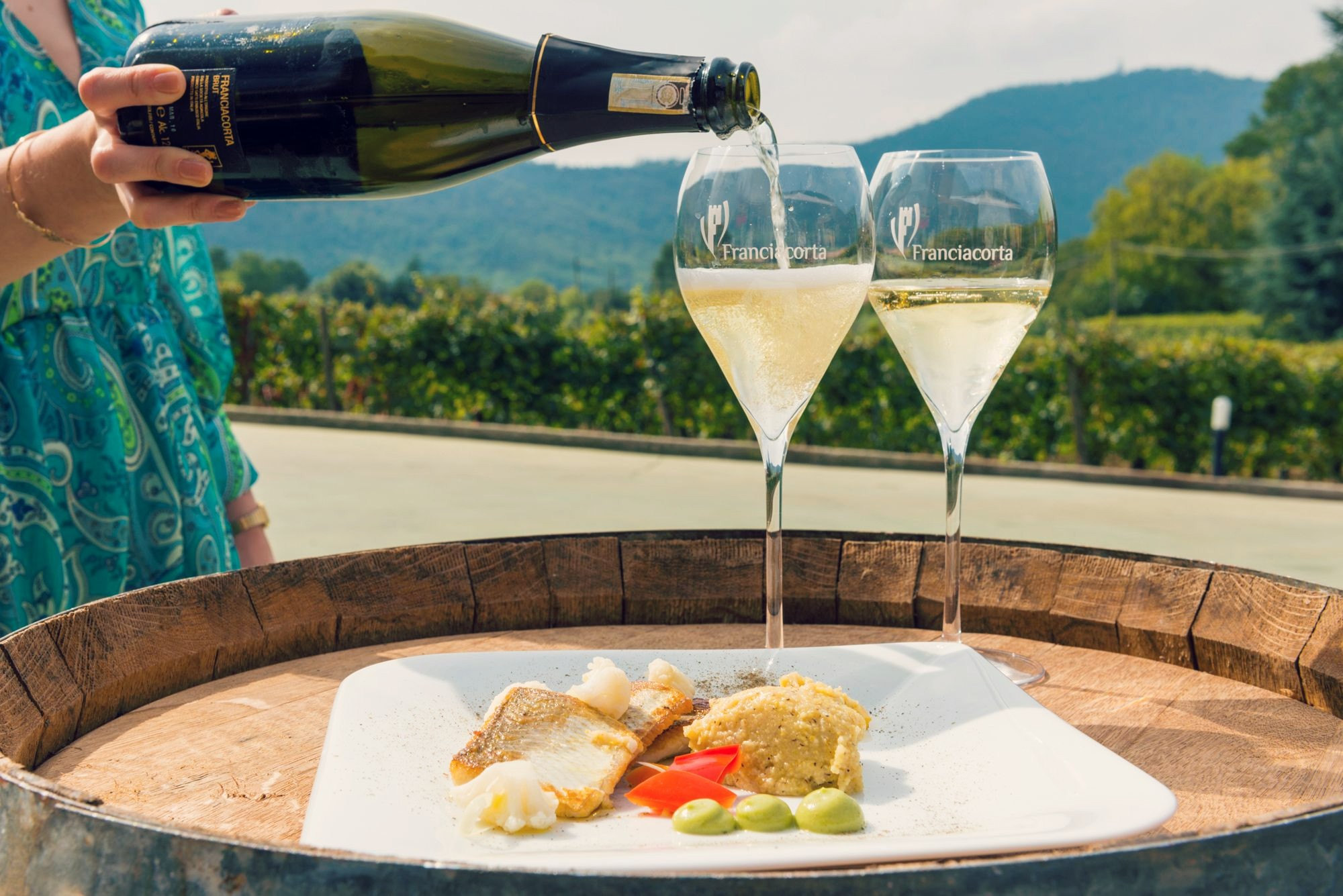
Exploring Family-Friendly Experiences at the Franciacorta Festival 2023 16-17 SEPTEMBER
The Franciacorta Festival 2023 is just around the corner, and families from all over the world are e

Not Just Venice: The Sweet Lagoon Life
When we think of the enchanting region of Venice, images of gondolas gliding through picturesque can